UDIDIT

UDIDIT
The home of high quality training.
Showing posts with label expert tips. Show all posts

Monday, 24 May 2021

Driving test tips - How to Save Money by Hiring a Professional


When you are working to a limited budget hiring a professional often appears to be a luxury. This is probably why DIY is so popular - it can't be that hard can it?

My garage is full of tools I've bought for a particular job and never used again, I've completed the job to a fair degree of satisfaction and saved some money but it never really looks like a professional has done it. My garage also has it's fair share of part completed 'projects' where what seemed to be a straightforward easy job turned out to be slightly more complicated than I'd imagined.

To a large extent this is the case with learning to drive. Loads of people can drive and therefore think it must be easy to teach someone to do it and part of me agrees - driving is not rocket science and even an amateur is allowed to teach you and there's a chance of passing the driving test, even when using techniques that are less than car or wallet friendly.
"If you think hiring an expert is expensive, wait until you hire an amateur"
So why pay a professional?

The difference lies in both the effectiveness and efficiency of learning from a professional.

The cost of learning is quantifiable and therefore it's really easy to see exactly what it costs and think "wow that's expensive." However, it takes a long-term view to see how the techniques taught by a good instructor could save you £1000's. The techniques an excellent instructor teaches you could save you even more.

Take for example the average driver's mileage of around 10,000 miles per year and the cost of fuel at 20p per mile, that's £2,000 per year. But what if you applied the fuel-saving techniques taught by your instructor and reduced this to 15p per mile, it would save you £500 per year.

I recently helped a pupil, initially being taught by her parents, get an extra 18 miles per gallon. Over a lifetime she could save enough money to buy a new car!

Added to these savings is the potential reduction in maintenance costs such as, amongst other things, replacing worn out clutches, brakes, tyres and steering and of course a reduction in insurance premiums by avoiding crashes.

You may not fail a driving test for using certain habits or techniques that are unlikely to be corrected when learning with an amateur, but over a period of time these are serial clutch killers. Habits such as 'riding the clutch' or occasionally unnecessarily 'slipping the clutch', or sitting at traffic lights in first gear with the clutch at the 'biting point' for long periods. These faults may not be deemed worthy of marking on a test but can take thousands of miles off the lifetime of the clutch. Considering that a replacement clutch is going to set you back a good £400-£600 these are expensive habits to have. This cost is comparable to around half of the current fee for learning to drive with a professional. The difference being, you only pay to learn to drive once. When treated well a clutch can last the lifetime of the car, yet if treated poorly may need to replaced regularly.

Another common habit we see that leads to additional wear and tear is changing down through each gear instead of using the more effective, and cheaper to replace, brake components . You really don't want to know what it costs to replace a gearbox.

I often recall a conversation I had with a friend many years ago. He was buzzing because he'd just taken his 4 year old car for a service and he still had 50% of his brake pads left.
"Not bad for 40,000 miles" he beamed.
I replied "that's interesting Rob, haven't you recently had your clutch replaced?"
"Yes" he said.
"How much did that cost you?"
"About £400"
"Oh, and how much would it have cost you to replace your brake pads instead? About £40?"

He didn't reply, but you could see the sudden dawning of realisation on his face.

You may have noticed that I've used the words 'could' and potential' a lot so far. This is because these savings rely on YOU doing what you've been taught, not just in the first few weeks of driving but for a lifetime (a lifetime that can be greatly reduced if you don't). And don't listen to that nonsense about learning to drive properly once you've passed your test, this just makes others more comfortable with their bad habits. You're as much an expert as they are.

Saving a few quid here and there may seem like a good idea in the short-term and I'm all for parents or friends helping out by giving learners the chance to gain experience in addition to driving lessons and actively encourage this, but a wise person should look at the money they are paying for an Approved Driving Instructor as a long-term investment in theirs or their child's future.

Something that has stayed with me is a phase my old House-master at school often said "the saddest two words in the English language when put together are...if only"

He's right you know.

For expert driving tuition or driving tips visit my website www.udidit.co.uk


Advertising in the driving school industry - how bad is it?

Legal, decent, honest and truthful

These four words form a key part of the intrinsic values of every Approved Driving Instructor (ADI) – don’t they?

For some time now I’ve had a bee-in-my-bonnet about the standard of advertising within the driver training industry, including both the intended and unintended messages these communicate.
I realise that for many ADIs this is the first time they have been self-employed, becoming not only a training deliverer but also, amongst many things, their own website designer, copy & proof reader, and marketing manager. However, websites and social media content generally goes unchecked and a lot of the transgressions are unintentional, but I guess even when giving them the benefit of the doubt, is ignorance really a valid defence for a responsible business owner?

Some businesses should know better
I recently received an email from one of the voucher scheme providers and one headline caught my interest
Get 4 beginners driving lessons - £12
After the usual round of eye-rolling and tutting I looked past the headline and clicked on the “fine print” which told me that the "Deal consists of 2 hours worth of driving lessons at the start and 2 hours before the driving test."
This revelation got me wondering what I’ve been doing wrong all these years –I’ve been doing pre-test preparation lessons two hours prior to the test and tend to get the beginner lessons out of the way quite early on when the pupil is...huh erm.... a beginner (Seemed more client-centred to me).

Now taking into account the fine print this particular headline appeared to be a little misleading, so I followed the advice of the Advertising Standards Authority (ASA) and sent the following business-to-business email politely requesting a change to the wording.

Dear Voucher Scheme Provider,
I would like to bring to your attention the misleading nature of a current advert you have running for XYZ Driving School. This advert clearly states:  "Get 4 beginners' driving lessons"
However; the terms and conditions restrict this to two beginner lessons.
Quote: "Deal consists of 2 hours worth of driving lessons at the start and 2 hours before the driving test". This means the customer cannot take four beginner lessons and [the advert] is therefore misleading and should either be removed or reworded.

Very shortly after I received the following reply from Voucher Scheme

Thank you for your E mail.
Any customer purchasing the deal with the merchant XYZ will get two 2 hour free lessons at the start when you begin learning. Any lessons the instructor feels the customer needs leading up to the driving test the customer will pay the merchant XYZ for. Before you take your driving test the 2 lessons all customers will have before their test will be free of charge. This equates to 4 lessons in total each at one hour in length.” 

For us mere mortals who couldn’t follow that logic, here’s a summary;
Two x 2 hours + 2 hours = 4 (1 hour lessons) and these are free
Where did the £12 go?  And how does 2 x 2 + 2 = 4? And how does a two hour lesson become a one hour lesson?

Time Travel
This made me wonder how I managed to miss the ADI training classes on how to bend the space and time continuum....
...and then it struck me, I realised just how it is they can deliver beginner lessons just before the test and only charge an equivalent £3 per hour – they must have a time-machine taking them back to the beginner lessons and then at the end of each day it takes the instructor back to the 1970’s when the cost-of-living was lower.

If they haven’t invented time travel then I suggest this particular advert isn’t accurately representing the service being offered and so I made it clear to Voucher Scheme Provider that if they continued the campaign with its current wording then I would have to formally complain to ASA. This did the trick and Voucher Scheme Provider sent another email informing me that the wording had been changed, although by this time the campaign had ended with over 220 vouchers sold.

Now you might be thinking so what? What’s this got to do with me anyway? Well, as a consumer and business owner it’s all about a sense of fairness and no doubt at some point we’ve all questioned the validity of an advertisement’s content, so why wouldn’t I challenge those in my industry which directly affect my business?

Buyers Remorse
Here’s the problem. Those 220 customers are now 220 fewer customers for all those businesses who follow the rules and play fair. Also, those new customers may regret not having read the fine print when they eventually find out that their expectations are not met and consequently a distrust of the industry as a whole grows. I recently took a call from a potential client who'd bought a voucher and spent the entire duration of the lesson driving around a car park because the instructor didn't know the area.

Over the next few weeks I continued to look out for further advertising by this company and sure enough around a month later a similar email was received. This time though, the wording had indeed changed and the beginner lessons simply became lessons. The effect was dramatic, as this time around the number of people purchasing the voucher dropped from 220 to 77. So, it appears that a large number of consumers were possibly misled by the wording of the previous advert and may well have made a different transactional decision had it not included the word “beginner”.

Many ADIs work independently and are unaware of the rules and regulations. Without an awareness of the advertising codes ADIs are likely to fall foul of the rules and leave their businesses open to all manner of issues. 

For expert driving tuition or driving tips visit my website www.udidit.co.uk
©Stu Walker 2021

Sunday, 16 May 2021

Why You Should Pay for a Lesson You Haven't Had

The vast majority of the UK’s Approved Driving Instructors are self-employed and only earn a wage when a client pays them – just like those awful zero hour contracts they're wanting to ban.
Imagine getting ready in the morning and turning up at work on time only to be told by your employer "sorry, we don't need you today". It has cost you time, and probably money, to be there and you might well have turned down other work and missed an opportunity to have been paid by someone else. How would you feel in those circumstances?
In a similar way it is you, the client, who employs the Instructor and therefore if you fail to turn up for your lesson or you give short notice of cancellation, your Instructor doesn't get paid.
The double-whammy is that the Instructor may well have turned down someone else for the time you have reserved and now can’t sell the lost time at such short notice. Not only does the Instructor miss out, other clients may miss out too.
When choosing a Driving Instructor, along with excellent teaching skills and a friendly manner, no doubt you will be expecting someone with a professional attitude and someone who provides excellent customer service. Within this you would certainly expect reliability and punctuality.
Looking at it from the Instructor’s perspective, they also hope that their clients are reliable and punctual, have a good attitude and are willing to accept responsibility for their own learning and responsibility for the bookings they've made.
If you had an instructor who consistently let you down, what would you do? I know what I'd do; I'd look for a replacement and many instructors do the same with customers.  I personally try to be as flexible as possible and I understand that life often gets in the way of learning. Maybe the kids are ill, unexpected bills need to be paid, work calls you in etc, or you simply haven't budgeted well and have run out of cash until payday. This all becomes obvious to an experienced Instructor, especially as the last week in the month sees more cancellations than any other. 
You may even be in the middle of a confidence crisis and can't face the lesson. Whatever the reason, to avoid having to pay, talk openly to your instructor and look for a solution before it's too late. 
Whenever possible and subject to availability, I personally allow some flexibility by offering another lesson time within 3 working days and waive the late cancellation charge if it is attended. However, as patient and understanding as I am there’s a tipping point and in these cases I have to take everything into consideration and reluctantly part ways with clients who consistently cancel at short notice or fail to turn up.
In my experience many Instructors have a standard 48 hour or so short notice cancellation policy whereby should a client cancel within this time then the lesson fee is payable either in full or in part. There are variations in these terms and if you're not sure, I recommend that you ask your Instructor what their business terms are.

“Why should I pay for something I've not had” cried the client who failed to turn up...
You may not have attended the lesson, but you have reserved that time for yourself and yourself alone. This is not dissimilar to booking a flight; a holiday; a hotel room or even a dental appointment - in fact any appointment you make and fail to pay for or attend,  costs someone something. One report estimates the cost to the taxpayer for NHS no shows as £162m per year, with more than 12 million appointments missed.
Unlike buying goods, if you reserve a service at a particular time and you don’t turn up, you have to pay because it can't be resold.
Sadly as consumers we all end up paying a little more to cover losses caused by other people’s actions, whether it’s for goods or services. Apparently we motorists pay around £30 extra per year on our motor insurance premiums simply to cover uninsured drivers. As a consumer I don't like the idea of paying extra to cover other people’s poor actions, but inevitably we all do and driving lessons are no exception.
“What can be done to reward the clients who are in the majority and are reliable?”

I often extend the lesson time for clients who turn up for every lesson and who give me plenty of notice if they ever need to change an appointment. It’s a nice way of rewarding them. I sometimes give away a free lesson as a way of saying thank you.
What I do know from my experience is that those clients who are reliable and hard-working are the ones most likely to succeed and ultimately spend less in getting their licence. 

The key to avoid paying for lessons you didn't attend, is to talk openly to your instructor, keep them up to date and together you will be able find a solution and maybe even get a nice little reward.

I'll leave you with a final thought - If businesses gave customer reviews, how would you rate?
For expert driving tuition or driving tips visit my website www.udidit.co.uk

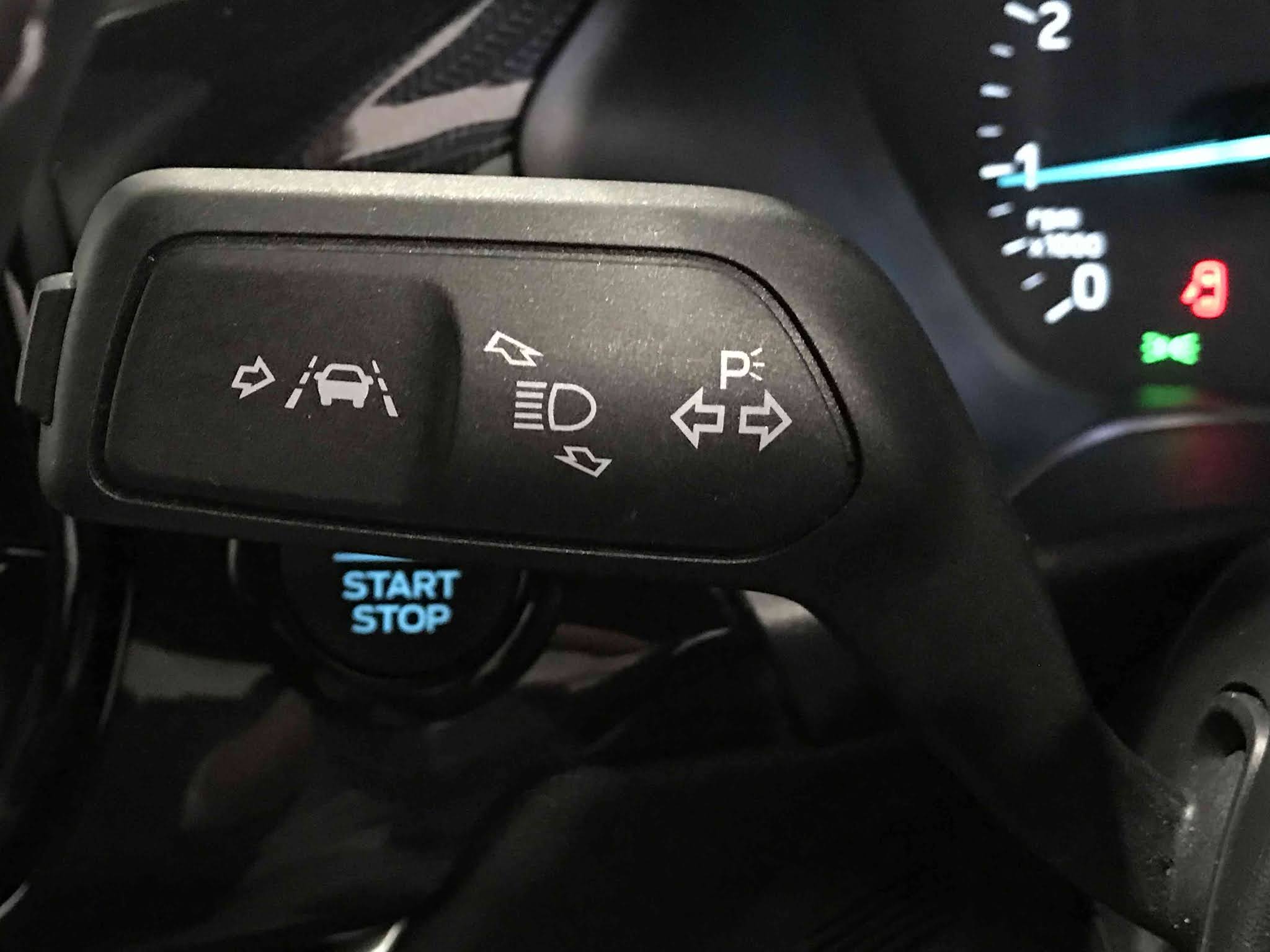
Driving test tips - Use of Signals - Learn how and why they are important

This type of switch can even be found in German cars 

"Giving a signal is not an instruction to other road users, it's a signal of our intentions which helps them make good decisions."

Signaling incorrectly or not at all is a certain trigger for an angry response from other road users and pedestrians alike. You may have heard the stereotype insult that BMW or Audi drivers don't signal, but the reality is that drivers of any vehicle are just as guilty. Failure to signal properly at roundabouts is one of the key reasons learner drivers struggle when trying to predict the actions of the other drivers. 

The expected standard is to give the correct signal, properly time this signal and in a situation where it is necessary to signal.

The 'correct' signal depends on which direction you intend to go, 'properly timed' means that it's not given so early that it has the potential to confuse someone or so late that they can't respond in time and 'where necessary' means when it is essential to avoid causing danger or potential danger.

If you get this wrong, then confusion can lead to mistakes and mistakes can lead to collisions. This is why other people often react angrily.

The actions of a good driver will be easily predicted. It is essential to use the Mirrors, Signal, Manoeuvre routine.

The use of signals is directly linked to situational awareness. Without this awareness it is simply left to chance whether you get it right or not. Before taking any action which involves changing speed, direction or signaling you will need to check all around so that you can make a good decision. 

I'm often told by pupils who are practicing with family or friends that they've been asked why they aren't signaling every time they move away from the side of the road or before pulling up to park. There seems to be an impression that this standard has somehow changed since they were taught to drive. The standards have been the same for decades - if you look around and you are sure that a signal is unnecessary, then there is no need to give one.

Simply signaling every time regardless of the situation leads to lazy or ineffective observations and doesn't help learners develop a good sense of situational awareness. 

A good driver will look all around, assess the risks and the need for a signal, and then give a signal where necessary and at the correct time.

"My Dad says I need to signal every time I pass a parked car."

Based on what you've just read, what's your answer to this question?

It's also important to remember that signals aren't just for other drivers. Pedestrians also need good information to avoid danger. Another common question is "do I need to signal at a junction where it says turn left only?" 

The answer to this is "If you think it might help someone decide not to cross the road, then it's necessary"

We can't assume that a pedestrian is aware that it's a left turn only junction.

Whilst we have been focusing on directional signals it's important to remember that there are other signals we can use. We have brake lights warning that we are slowing or stopping; we have reverse lights warning that we are reversing; we have hazard warning lights used to warn that we are causing a temporary obstruction or are slowing rapidly on a motorway or national speed limit dual carriageway and of course we still have arm signals at our disposal should we feel the need to support other signals.

One other less obvious signal of our intentions is to position correctly, this helps others interpret what we intend even if they can't see our signals. This will be the subject of a future blog.

Whichever signal you intend to use, you will need to be situationally aware before you use it.

On your next lesson, ask yourself "Do I need to signal? Which signal do I need? When should I signal?"

For expert driving tuition or driving tips visit my website www.udidit.co.uk

Friday, 23 April 2021

Driving Test Tips - Block Gear Changes - Learn how and why these are so important

Typical gear position layout


"Doesn't your instructor teach you to change down through the gears?"

During the pandemic lockdowns many learner drivers have been turning to their parents/grandparents to help them practice. This is generally welcomed and has more benefits than it does drawbacks, however, there are often clashes with the style of driving and techniques being nurtured by the instructor (officially considered best practice by the Driving and Vehicle Standards Agency) and the style and techniques an accompanying driver has developed since learning to drive (considered best practice by Mum or Dad)

Some of the common clashes are the use of gears, the use of the handbrake and steering techniques.

The most common clash, in my experience, is the use of gears. "Doesn't your instructor teach you to change down through the gears?"

The short answer is, no we don't, with the exception of beginner lessons where we may use this as a way of familiarising the learner with the gear positions. 

Out-dated techniques

In days of old it may have been necessary to change down one-by-one (sequential gear changing), but the flexibility of modern engines and the efficiency of modern braking systems means that we can use cars differently to those, for example, of the pre-1970's. 

This is not something that has changed recently - I was taught to drive in the early 1980's in a 1978 Toyota Corolla and was taught to block gear change way back then. I also used this technique when passing an advanced driving test in 1990 and the Cardington Special Test Grade A (super advanced driving test) in 2000.

There are a number of reasons why sequential downward gear changing is not best practice. These include; increased wear and tear on expensive components, increased fuel consumption and exhaust emissions, reduced car control and most importantly - under-developed situational awareness.

Best Practice! 

The terms used for missing out gears are 'selective' or 'block' gear changing.

There should be no need to rush gear changes. Smooth and even movements are best and this is made possible by planning ahead.

You need to be aware of the situation ahead. What is likely to make you change speed or direction and by how much? By anticipating changes to the situation and planning how you're going to cope with it, you will be able to make good use of the brakes and avoid unnecessarily changing through each gear. 

A driver who has developed good sense of situational awareness and judgment will be able to recognise how much the situation will make them slow down and is able to reduce speed using the brakes and then selecting the gear that matches the lowest speed matching the situation. This awareness is missing in drivers who change gear one-by-one out of habit rather than through good forward planning.

Common downward selective gear changes are  5th to 3rd; 4th to 2nd; or 3rd to 1st. A good driver will also be able to make good use of the brakes and clutch pedal timing to skip from any higher gear to any lower gear.

One obvious benefit in all of this, is that you are warning following drivers via your brake lights of your actions. Gears may help slow the car down by using the 'engine braking effect' but this technique gives no warning to following drivers and therefore increases the risk of a rear-end bump.

In addition, when braking, force is heavier on the front wheels, which is why front brakes are designed to be stronger than rear brakes. In a situation where you are changing down sequentially, your hand spends less time on the steering wheel and therefore less time under full control of the steering. 

It may seem like a matter of fine margins but fine margins are what defines 'practice' and 'best practice'. These best practices play a significant part in reducing the risk of crashes.

Do you know you can also block gear change up?

Again, a driver who has developed a good sense of situational awareness and judgment will be able to skip gears when accelerating. An example of this is when joining a dual carriageway where you need to match your speed to the flow. Third gear may give you the acceleration capability to quickly get to the required speed but once in the flow and the need for acceleration is replaced by the need for fuel-efficiency, it is beneficial to go from 3rd to 5th gear without selecting 4th. Commonly used block gear changes upwards are 2nd to 4th, 3rd to 5th, 4th to 6th.

Ask for clarification

If you are helping someone practice between lessons, please continue to do so, but if there is anything which you do not understand, for the learner's sake please don't try to change what they have been taught before communicating with their instructor.

Take care!

For expert driving tuition or driving tips visit my website www.udidit.co.uk